Showing posts with label kids. Show all posts

Thursday, October 11, 2012

Healthy Truffles for Holiday Gifting and Eating


                                   Truffles 

Easy to Make—Naturally Sweet—Great Holiday Gift!

Your children will be delighted to help you make and decorate these sweet little treats for the holidays.

I've made a healthy mostly-raw version of truffles half a dozen times and decided to try a new recipe last week. I made some goodies for a bake sale to benefit a needy family in our local homeschool group and these were a portion of what I ended up bringing. See the easy instructions below—take your pick from TWO Truffle recipes!

Today I am happy to link up with Walking in Faith's 
 Join in the fun!

Chocolatey Truffles: 
This recipe is like one found in the book Raw Family Signature Dishes by Victoria Boutenko. The basic dough ball is formed from the same mix she uses as her basic chocolate cake (but there's no chocolate in it)!
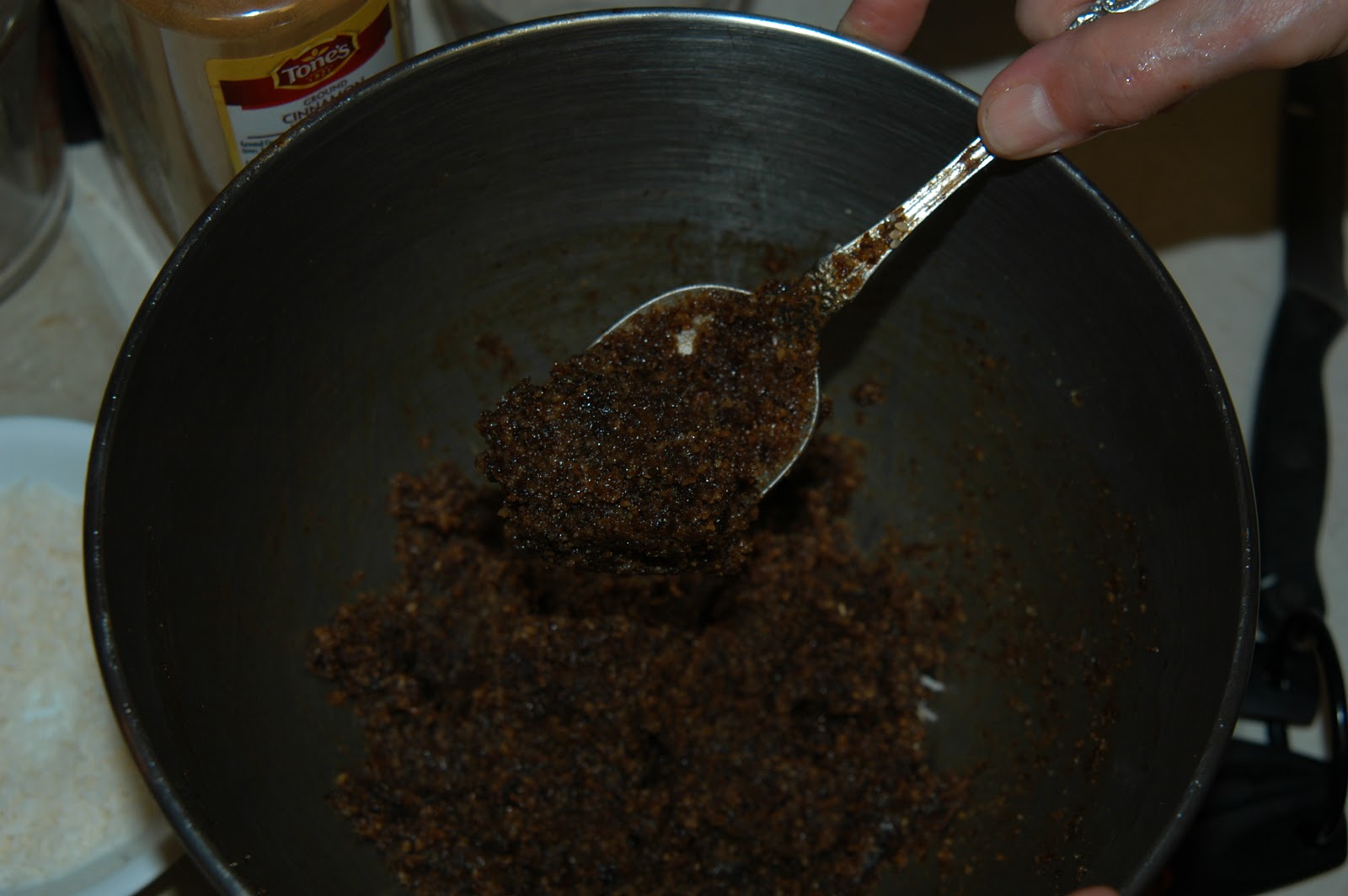
Yes, it does look like chocolate! But here are the simple ingredients: 
  • 2 cups walnuts (soaked, drained and dehydrated)
  • 2 cups organic raisins
  • 2 Tbs olive oil,
  • juice from 1 lemon
Of course—it's the raisins that give it that rich dark color! And it really does have a chocolate taste.

Directions: Place walnuts into a food processor and grind well. Remove walnut mixture to a bowl. Add raisins, lemon and oil to the processor and mix until it's creamy. Combine this mixture in the bowl with the walnuts. Roll by hand and form into one-inch or teaspoon size balls. Set them aside.

Place small dishes of your favorite toppings to dip your truffles in. I chose: 
  • shredded unsweetened coconut, 
  • sesame seeds, 
  • cinnamon, 
  • carob chips
  • melted dark chocolate


The Toppings

 Dipping

Place dipped truffles in small candy-size papers and arrange in a pretty box and top with a bow. I also arranged a six-count amount in inexpensive plastic storage containers. (You must save some to enjoy for your own family!)


Optional: Decorate with a cherry half, nut, or candy, pressed into the top center of each truffle.

Pretty boxes add some holiday color.

Here's another truffle recipe from my
Kathy's Kitchen & Raw Nutrition blog
 

We're not done yet—
Scrumptious Truffles

For many years I made what we called No Bake Munchies, a recipe similar to this one, but where you'd boil honey and some butter for one minute together and then add in natural peanut butter and whatever other ingredients you wanted to amount to 3 cups worth. Now, I make a variety of nut/seed/fruit balls and bars that are mostly raw and better for you.

Benjamin Mixes the Truffles

Carob/Almond Truffles

It was fun to have Benjamin join us for this Desserts Class where he whipped up this truffle recipe. They're great!

1/2 cup honey
1 cup uncooked oats
2 tsp. ground flax seed
1 cup almond butter
1 Tbsp coconut oil
1/4 tsp. vanilla
1/4 cup carob powder
14 tsp sea salt

1 cup minced nuts (cashews, walnuts, or pecans)

Mix first list of ingredients together and roll mixture into one inch balls. Roll balls in nuts. Refrigerate.

Enjoy your holiday gift giving! Got a recipe to share? Link up at  Holiday Treats Bog Hop.

Saturday, January 21, 2012

Links to Inspire You and Your Kids to Write and Be Published


Learn More About Writing and Publishing

Looking for places where you or your kids can polish your skills and perhaps get published? Here are a few favorite sources and a few new ones I found to check out:
  • Homeschool Gazette Though no longer accepting submissions, you can find creative writings from homeschoolers and a lot of ideas to use. (This is our family's older website.)
  • Young NanoWriMo Young National Novel Writing Month isn't so much a competition—rather a month long challenge to children to write a novel. If approved and they complete their word count in time, they can get a printed copy of their book.
  • One Year Adventure Novel  Student writer’s contest open to licensed users of this program. We have a local homeschool family that highly recommends this creative program.
  • Kids Are Authors Contest  Hosted by Scholastic. Grades K–8. Under the guidance of a project coordinator, children work in teams of three or more students to write and illustrate their own book. Deadline: 3-15-12 


Get Writing—Get Published! 
I was hoping to find many more homeschool  publications but here are a few links to check out:

  • Apricot Pie A unique website designed by and for homeschoolers, where young people can post their stories, essays, poems, and photography. For homeschool students and graduates.
  • Write Me a Story  A place where children can try their writing skills, share their imagination, read fun stories, and maybe even get published on the Internet! For students (11 and under) and teens (12 and older).
  • Writing for Kids  A kid-friendly site that welcomes student writing samples. Send yours in and get published!
  • The Kid’s Ark  Children’s Christian magazine - Geared to kids ages 4-12, quarterly 36 page, full-color, interactive magazine.

You Have Something Worth Saying—15 Ways to Embark on a Wild Writing Adventure

I had the privilege of sharing my experience with, and love for writing with our local homeschool group this week, along with several published authors. Below, I am sharing part of a handout I prepared (along with some commentary) to help young students.


Do you want to write and publish your work? Where do you begin?

15 Ways to Embark on a Wild Writing Adventure 

1. Believe in yourself, and be the peculiar person that God made you to be
 Everyone is unique. We all come from different backgrounds with special gifts, experiences and talents. Don't try to be someone you aren't—tap into your own creativity and style—making it your own.

2. Possess a growth mindset—you can learn and do what you put effort into
 I wish I had understood this much sooner in life, so I really want to emphasize this. Don't hinder yourself by thinking you cannot learn something—you most certainly can! Even the most talented and experienced people began at the bottom, putting forth a lot of patience and practice. If it's worth doing, don't limit yourself.

3. Think creatively—play with words and sentences and make it FUN
 Writing is hard work, but you can make it more fun if you view it creatively and lightheartedly. Enjoy the process of writing.

4. Write ‘til your hand and wrist hurts—NOT, but write every day you can
 Practice, practice, practice. The best writers got that way by doing what they love: writing.

5. If you have a brain freeze, write anyway, and see what surfaces
It happens sometimes. But there is a type of writing known as freewriting where you just write and see what comes. It could get you started to where you want to go.

6. Finish what you start (or play trashcan basketball with your paper wads)
It's a good idea to give each project your all, and then look toward the final edit where you can change it anyway you want. It just might be that it needs a new twist or a major overhaul, but your diligent attitude will pay off.

7. Keep breathing . . . and save editing until you get your thoughts down 
Spelling, grammar, the hard stuff . . . let it wait till you have something nice to work with. No one writes the perfect paper first time around.

8. Read a lot—including classics, and reach beyond your normal interests too
I did not know about the classics until I was a homeschooling teacher, and then I read aloud with my sons and read also on my own. Becoming well read will add a wonderful element to your overall writing experience, growth and knowledge base.

9. Read how-to books or web sites on the craft of writing
I'm going to do a post following this one with some favorite and new links that will greatly help you.

10. Be brave—share your work with others
Don't be shy, but most beginning writers are. Find a friend, family member, or small group of writers who will join forces to help each other improve and bounce ideas around.

11.  Listen to constructive feedback, even if it’s your mother (you don’t have to agree if you don’t want to)
It's your work, only make changes that you decide, but do listen to and respect your reader's comments.

12.   Be an inspiration to yourself and take a writing course (you might find out a lot more about who you really are)
You may not know what you are capable of until you stretch yourself into a new learning zone. Try it!

13. Enter a contest (you could win $$$) or submit your writing to a friendly market
Just start somewhere. Once you get a small (or big) effort published or known, you'll be spurred on to new writing heights.

14. Set goals, and plan out the steps to get to where you want to be, marking off little achievements as you go
Lists can be your best friends. Decide your plan and make it happen. You'll feel great as you get closer to your big goal, and when you do, celebrate!

15.   In everything, give thanks! (It could be worse you know—think Cinderella)
Attitude is everything. Did you know that God can take something that seems bad and turn it into something good? There are going to be trying days and hard times, but take heart and know that everything will work out in the end. You can do this!

  Think About It . . .  

“Finally, brethren, whatsoever things are true, whatsoever things are honest, whatsoever things are just, whatsoever things are pure, whatsoever things are lovely, whatsoever things are of good report; if there be any virtue, and if there be any praise, think on these things.”
—Philippians 4:8

"If you cannot do great things, do small things in a great way."—Napoleon Hill
“Don't say the old lady screamed. Bring her on and let her scream.” —Mark Twain
"So the writer who breeds more words than he needs, is making a chore for the reader who reads."  —Dr. Seuss
"Always be a first-rate version of yourself,
instead of a second-rate version of somebody else."
—Judy Garland

Sunday, January 8, 2012

Tricks that Encourage Young Writers


I often hear from homeschooling moms who ask me how to motivate their kids to write and to enjoy writing. What is the trick, they want to know. There are a number of things that could contribute to their dilemma and many ways they can begin to implement good habits leading toward inspiring children to enjoy writing.

Writers learn by writing.

Perhaps young students have been pressured into writing before they were ready. Maybe the required writing activities held no real interest or meaning to the child. A lack of a good read-aloud diet and good oral skills could be the cause of immature language development. Kids are not made from a cookie cutter mold but there are some tricks (if you prefer to call them that) that will help your students become more interested and engaged in writing pursuits. Let's look at these closer.

Writers are comfortable writing.

Writing is hard work. Kids need plenty of time to get comfortable with writing—even the use of a crayon or pencil. Aren't most little kids pleased as punch with their new discovery in drawing (writing): You find your child's pictorial portrait on the wall or creative signature on the side of the house, crayon marks on the curtains, and marker stains on clothes and skin, etc. But some kids haven't had enough time to develop before they are suddenly required to make these neat little lines and circles and stay between the lines—and it's simply boring. Boring to those that already have a good grasp on things and boring and frustrating for those just starting to form letters and understand the process. Don't rush the process too soon if met with defiance.

When my guys were small most of them had a great vocabulary but slowly emerging writing skills. We did a lot of oral narration. I would write down what they dictated to me. This could be in the format of a letter to Grandma, a story that we made into a book, or a funny poem to be shared or just a retelling of something they learned or experienced. Oral "writing" is a prelude to the writing process. Once they get good at oral communication, the next step is getting what's in their brain onto their paper. Copywork can be used effectively here, as they copy what you have written down for them.

Writing takes patience and lots of practice. The best writers tell us the more they write the better they write. Give your kids time to practice their wonderful new language skills with plenty of encouragement. Help them brainstorm for ideas when appropriate. Editing is also a major part of writing which they learn as they go, but be careful, too much criticism too soon will only backfire. Let them get those thoughts down without worrying about spelling and correct punctuation just yet. Find positive things to say about a funny word or interesting thought or sentence that they used. Keep the atmosphere a lighthearted one.

Writers are good readers.

I mentioned a read-aloud diet. The avid reader is most always a better writer; they go hand in hand. I found this to be true in my own family. My oldest son learned to read early at age five, was fluent by seven, and adored reading. He was also a natural writer. The two middle boys were late readers who weren't fluent until ages 10 and 11. My last son was sort of average and in between the others but he was slower in language development—it just did not come easily to him. For all the boys, reading aloud offered them the ability to hear the words and gain proper grammar and excellent language syntax in which to base their internal linguistic processes. It all certainly pays off big time in creating a love for the written word and its capabilities. Kids who are not read to often and who may be less than great readers will most certainly be far behind their peers who are.


Writers are curious minded, and good communicators with many interests.

What excites your child and what interests do they have? How can you develop these into a writing passion? You don't want to stifle your child's natural curiosity and many kids get turned off in school subjects by having to digest and spit back endless amounts of information that have no real interest or meaning to them. I don't know who makes up those elementary scope and sequence charts or who writes those snippety texts, but I refused to follow their classroom focus. Instead search out real living exciting books that grab interest. Look for colorful language and stimulating detail about the subject matter. Let them get their hands dirty. It could make a huge difference in how your children view learning and their desire to learn more and to express themselves through words and writing about those interests. Hey, if you haven't given lapbooks a try, I highly encourage you to give it a whirl.


Writers write for a reason.

My boys always wanted to know the relevancy behind what I asked them to do. It wasn't good enough if I said, "because I said so," plus I could see their point. Why not make the things I asked them to do useful? What is relevant? How can I turn this writing assignment into something useful in the real world? After all, isn't that what I was preparing them for—the real world?

Writers need an audience.

Everyone has something to say, in their own unique voice. Keeping a journal is wonderful in and of itself and I certainly encourage kids to do this, however, it makes a big difference when they are able to share their writing and impact an audience other than themselves. Getting feedback on a job well done is important and the encouragement will spur them on to continue writing and consider other projects. There are many ways to do this, from reading a paper to Dad and sending a thank-you note, to getting a poem published in a magazine, or even publishing your own E-Book.


Over the years we made homemade books, wrote book reviews (Amazon.com and the local newspaper), started the Homeschool Gazette and participated in other newsletters for kids, wrote letters to family, sent anonymous Scripture notecards, made scrapbook pages, narrated, participated in homeschool classes, blogged, entered contests, wrote letters to the editor, made up written tests for friends and family, acted out stories, gave oral presentations, participated in a local theater workshop and wrote play scripts, wrote letters to companies about their products, and much more.

Writing is habit forming. 

Make it special, make it fun, and write everyday if possible. Enjoy, and remember that parents should share what they write with their children also. That's one of the best models children can have, to see Mom and Dad enthusiastically engaged in writing.

Writing is not a school activity, it's a lifestyle habit that is necessary, pleasurable, and rewarding.

Sunday, November 9, 2008

Our Homeschool Gazette Story (Newspapers and Reporters Unit Study)


One of the best unit studies we ever did resulted in a wonderful way of sharing what we were learning and writing with other homeschoolers around the world. This is taken from our web site Homeschool Gazette. We no longer accept submissions there, nor do we have a newsletter, but you'll find some creative ideas and encouraging information. ~Kathy

Since age seven, Josiah took off with reading. He loved 3-2-1 Contact, Ranger Rick, and Highlights magazines. His favorite was Reader's Digest, in which I had to rip out any unwanted articles that I preferred to hide from him. I so enjoyed seeing him curled up with a book, and hear him chuckle at something funny he had read.

Writing was a different story. He had a vivid imagination and could sometimes narrate his ideas, but he seemed to balk at attempts to write on his own, outside of simple thank you notes and short letters to grandma. I felt he needed a reason to write.

An inexpensive work book caught my attention in a homeschool catalog - Newspaper Reporters (an introduction to newspaper writing), published by Teacher Created Materials. At age nine, Josiah, and Gideon, seven, began a unit study on "Newspapers and Reporters". My idea was to study various aspects of good writing related to newspaper and magazine type articles, try writing their own similar articles using our word processor, culminating the study with a newsletter filled with their writings to share with family and friends. The boys thought it sounded like fun. It worked out to be one of the best ideas I've ever had!

Grandma sent a Sunday paper from Ocala, Florida. We lived in Washington state at the time and I wanted a different perspective on the news to study from. We used the workbook but only as a guide to meet our own desires and needs, feeling free to skip parts that we had no interest in (like writing sports stories) or that were redundant, unnecessary, or unappealing to the boys. It had some great ideas though that we had fun using.

Before long, the boys compiled articles, poems, ads, puzzles, cartoons, and a contest. Josiah wrote a humorous piece after reading the Dave Barry columns. He wrote a feature article on traveling through New York state, requiring research. Gideon dictated an intriguing work of prose about springtime. We studied layout, headlines, art, advertising, weather, proofreading, interviews, and editorials. Some of Josiah's work was half narrated, which helped ease his way into writing on his own.

At the time we were ready to embark on our own newsletter compilation, a real live computer had just arrived in our living room! The timing was perfect. Our study turned to computers and learning how to set up our newsletter using Publisher software. We turned out our first Homeschool Gazette soon afterward. The computer became an instant love, and Josiah absorbed knowledge incredibly, as if by osmosis. The newsletter turned out so nice, we all had the idea to continue it, making it a publication that our friends (most all homeschoolers) could participate in. [We published it faithfully for close to five years. Josiah designed and maintains this web site, and other homeschoolers from around the world are welcome to participate.] But best of all, Josiah is a writer, and an editor. When he gets an idea, he can whip out an article on the computer and he enjoys it.

During this particular time of study, we concentrated on writing and language arts. Only a smattering of math was accomplished apart from facts review. We read a lot together, and discussed what we liked about the articles we read and what we didn't like. I also participated by writing some of my own articles to share with the boys. It was a very enjoyable time for all of us. As a side note, I have heard home school moms say to me, "But you are so creative. I could never do what you do!" Perhaps they are afraid to try. We are ALL creative, and just need to act on our ideas. Relax, and let your God inspired creative ideas go wild...

P.S. Our boys are presently 22, 19, 16, & 13.

Monday, September 29, 2008

Curiosita


"It had long since come to my attention that people of accomplishment rarely sat back and let things happen to them. They went out and happened to things." ~ Leonardo Da Vinci

From the category of famous people, the young man I am tutoring chose to compile a notebook on Leonardo Da Vinci . Good choice! We've studied him before, but can you ever stop studying Leonardo? I had never heard of Leonardo's horse ordeal until recent weeks. How did I miss that before? The Creative Thinker of All Time boasts of amazing accomplishments. He was an artist, architect, sculptor, inventor, engineer, and scientist. He was also an entertainer, musician, production designer and manager, writer, naturalist, scholar and philosopher. Has his understanding of the world opened doors of knowledge for us? From his exemplary life, we can see that Leonardo surely went out and happened to things!

Curiosita - An insatiably curious approach to life and an unrelenting quest for continuous learning, is the first of the seven Da Vincian Principles expounded upon in the book How to Think Like Leonardo Da Vinci by Michael J. Gelb. As a mother, I can visualize the natural curiosity and desires of my little boys to explore, taste and experience the fascinating world around them, and as a homeschooling mom, I'd never want to see this innate lust for learning end.

I have been researching Leonardo in my own curiosity quest. I've always liked to draw and I admire beautiful paintings and the artistic talents of others. I am a fan of museums and have seen many famous paintings in my lifetime. I'd like to think like Leonardo, and learn seven steps to genius every day as the title suggests (I'd like to try writing backwards, though I'll leave out dissecting bodies, thank you).

Mr. Gelb believes that our learning power can improve with age (I'd like to believe that). Couldn't I use this knowledge to pattern our own education? I wonder how far we are from Leonardo's methods? The Curiosita Self-Assessment checklist the book provides claims that your answers tell how well you are already using it and where to improve. Here's the list:
  • I keep a journal or notebook to record my insights and questions.
  • I take adequate time for contemplation and reflection.
  • I am always learning something new.
  • When I am faced with and important decision, I actively seek out different perspectives.
  • I am a voracious reader.
  • I learn from little children.
  • I am skilled at identifying and solving problems.
  • My friends would describe me as open-minded and curious.
  • When I hear or read a new word or phrase, I look it up and make a note of it.
  • I know a lot about other cultures and am always learning more.
  • I know or am involved in learning a language other than my native one.
  • I solicit feedback from my friends, relations, and colleagues.
  • I love learning.
I can check yes by a number of these, but also would need much discipline in others. In light of the above and what I know about Leonardo, I see a correlation with Charlotte Mason's educational philosophy. Ms. Mason wrote "Education is an atmosphere, a discipline, a life," and the CM school motto is "I Am, I Can, I Ought, I Will." She also said: "We trust much to good books - Once more, we know that there is a storehouse of thought wherein we may find all the great ideas that have moved the world." She encouraged keeping journals from an early age and the study of languages. Children were to be free in their play, letting them use their imaginations and providing time for their many self motivated projects, but parents were always present guiding lights. History (chronologically) and nature study were emphasized. Both Charlotte and Leonardo were advocates of virtue, including truth and beauty. Relating more specifically to children and curiosita Charlotte shares this:

"The idea that vivifies teaching. . . is that 'Education is a Science of Relations; by which phrase we mean that children come into the world with a natural [appetite] for, and affinity with, all the material of knowledge; for interest in the heroic past and in the age of myths; for a desire to know about everything that moves and lives; about strange places and strange peoples; for a wish to handle material and to make; a desire to run and ride and row and do whatever the law of gravitation permits. Therefore. . . we endeavor that he shall have relations of pleasure and intimacy established with as many possible of the interests proper to him; not learning a slight or incomplete smattering about this or that subject, but plunging into vital knowledge, with a great field before him which in all his life he will not be able to explore. In this conception we get that 'touch of emotion' which vivifies knowledge, for it is probably that we feel only as we are brought into our proper vital relations." ~ Charlotte Mason

Wow! Doesn't that sum it up? Curiosita is just the first of the Da Vincian Principles and is demonstrated by a continuous quest for learning . In that chapter the author lists a number of exercises one can do to improve your skills and apply this concept. He asks the question "What would you learn if you could learn anything at all?" Most of the people he asks answer with things that express an ideal or dream hobby, something they always wanted to do but never did, and I'm thinking to myself, I have a lot of those. Some I have touched on in the past but just failed to continue to make time for them. Mr. Gelb finds that people who pursue those hobbies passionately live richer, more fulfilling lives. And Charlotte Mason would agree. There are many hobby-like activities I'd love to pursue further, and I'd like for the boys to find new ways to enjoy life too. As a people, we have all kinds of excuses for not doing those things (I'm guilty), but as Leonardo would answer, "You can have no dominion greater or less than that over yourself." It's never too late!

Some other insights I found in these interesting exercises included the free writing technique that we have been employing at home (I've mentioned this in an earlier post). He calls it stream of consciousness writing but it's the same thing, where you write continuously, always keeping your pen moving, paying no attention to grammar or spelling etc. I liked this metaphor of the poet's motto: "Write drunk, revise sober." I'll have to remember it.

Leonardo kept a notebook with him wherever he went. I bought a nice leather journal for that purpose in the last few years, and though I did that for several months, I didn't continue to lug it around, but wrote in it at home. He used his notebooks (seven thousand pages still exist but authorities estimate it was twice as many) without organization, mixing all kinds of thoughts, letters, doodles and drawings, new vocabulary, plans, scientific treatises, questions and even copy work!

The Great Problem Solver was a man who asked many questions. He felt this was much more important than giving right answers. Quite the opposite of today's educational institutions. Finding and asking the right questions will lead you to the solutions. I think I need to re-emphasize this approach to our learning at home.

Leonardo taught himself Latin at age 42. Babies learn languages easily, but at any age this is a fun hobby and you can actually learn faster than a baby. We've dabbled in German in past years when one son had an interest and recently Jeremiah developed an interest in French. I picked up a freebie - a set of learning cassettes that we still have to delve into. I love language; the etymology of our own English leaves much to discover. Leonardo defined over nine thousand words in his journals.

Charlotte Mason had much to say about developing good habits. Leonardo was keen on observational and emotional intelligence, studying people and their habits, much as he also studied nature and animals. He majored in getting along with others! A required book for graduating in our homeschool is the favorite classic How to Win Friends and Influence People by Dale Carnegie.

I'm only in the beginning chapters of How to Think Like Leonardo but let me share briefly, the remaining seven principles:
Dimostrazione - A commitment to test knowledge through experience, persistence, and a willingness to learn from mistakes. Sensazione - The continual refinement of the senses, especially sight, as the means to enliven experience. Sfumato - A willingness to embrace ambiguity, paradox, and uncertainty. Arte/Scienza - The devepment of the balance between science and art, logic and imagination. "Whole-brain" thinking. Corporalita - The cultivation of grace, ambidexterity, fitness, and poise. Connessione - A recognition of and appreciation for the interconnectedness of all things and phenomena. Systems thinking.
I'm looking forward to learning more from Master Da Vinci in these next chapters and modeling the Da Vinci lifestyle and information I am learning to my boys, applying more to our home schooling. To start, I have a nature watercolor painting and colored pencil drawing I could complete and possibly submit to the Boone County Fair this week. I'm also going to get out those French tapes. Having had Charlotte Mason as a mentor gently leads the way. Au revoir, or as Leonardo would say buona notte.

Featured Drawings: Leonardo's Christ Figure 1490 and Study of a Womb 1489 from his journals